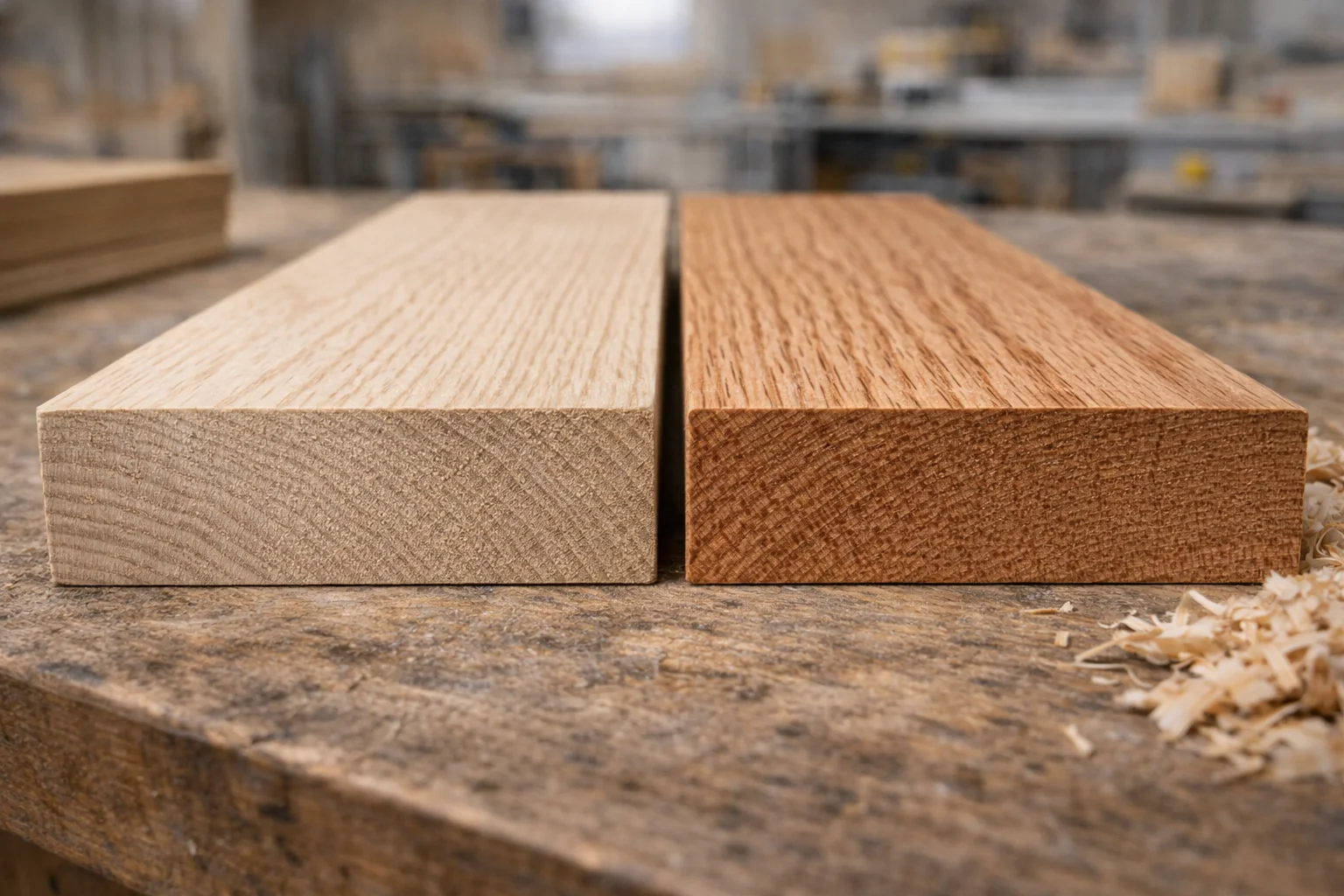
When choosing hardwood for cabinet doors, flooring, furniture, or other projects, white oak and red oak are two of the most popular North American options. Both are strong, beautiful hardwoods with classic appeal, but they differ in ways that can make one a better fit depending on your needs—whether you're aiming for durability in a high-traffic kitchen, moisture resistance in a bath vanity, or a specific aesthetic in your remodel.
At TFL Door, we offer premium Thermally Fused Laminate (TFL) doors in realistic oak grain finishes that capture the look of both white and red oak without the maintenance of solid wood. But if you're curious about the real thing (or just want to understand the grains and properties behind our designs), here's a detailed, informational breakdown of white oak vs. red oak.
Key Differences: Head-to-Head Comparison
| Feature | White Oak | Red Oak |
|---|---|---|
| Color | Pale to medium brown/tan with subtle golden or grayish undertones; often cooler and more neutral | Pinkish-red to reddish-brown; warmer and more pronounced reddish hue |
| Grain Pattern | Straight, consistent, and subtle; tighter, more uniform with occasional "ray fleck" (silvery rays) | More prominent, wavy, and open; dramatic swirls, larger pores, and varied texture |
| Pore Structure | Closed pores (filled with tyloses); less porous | Open pores; more porous and absorbent |
| Durability (Janka Hardness) | 1,360 lbf – slightly harder and denser | 1,290 lbf – still very durable but a bit softer |
| Moisture/Water Resistance | Excellent – resists rot, decay, and water absorption | Good but lower – more prone to swelling or moisture issues |
| Rot Resistance | High (ideal for outdoor or wet environments) | Lower (best for indoor use only) |
| Stain Acceptance | Takes stain evenly but more uniform results due to tighter grain | Absorbs stain deeply and highlights dramatic grain; great for bold or custom finishes |
| Cost | Typically higher (30–50% more in solid form) | More affordable and widely available |
| Best For | Modern/minimalist looks, high-moisture areas, long-term durability | Traditional/warm styles, high-traffic indoor spaces, budget-friendly projects |
Detailed Breakdown: Properties and Characteristics
Appearance and Aesthetics
White Oak offers a cleaner, more refined look—perfect for contemporary, Scandinavian, or transitional designs. Its subtle grain and neutral tones pair beautifully with lighter stains, grays, or natural finishes. The occasional ray fleck adds elegance without overwhelming.
Red Oak has that classic "oak" look many people picture—bold, prominent grain with warmth and character. It shines in traditional, rustic, or Craftsman-style homes and takes dark stains exceptionally well to emphasize the texture.
Durability and Strength
Both are tough hardwoods, but white oak edges out with higher density and hardness. In real-world use (like cabinet doors or flooring), the difference is small—both resist everyday wear—but white oak dents less and holds up better in busy households with kids or pets.
Moisture and Environmental Resistance
White oak's closed pores make it legendary for water resistance—historically used in boatbuilding, whiskey barrels, and outdoor furniture. Red oak's open pores make it more absorbent, so it's best sealed well for indoor applications like cabinets or flooring.
Workability
Red oak is often easier to work with hand tools (less dense), while white oak machines cleanly but can be tougher on blades due to its density.
Common Uses for Each
White Oak
- Cabinetry and millwork — Especially in modern kitchens, bathrooms, or humid climates (better stability and moisture resistance).
- Flooring — High-traffic areas, entryways, or kitchens where dent resistance matters.
- Furniture — Tables, chairs, or built-ins needing premium durability.
- Specialty — Outdoor projects, barrels, or anything exposed to liquids.
Red Oak
- Cabinetry — Traditional kitchens, laundry rooms, or offices where warm tones and bold grain add character.
- Flooring — Living rooms, bedrooms, or hallways—its prominent grain hides minor scratches better in some cases.
- Furniture and interior trim — Beds, dressers, paneling, or stair parts.
- General woodworking — Affordable choice for DIY or large projects.
Which Should You Choose?
Go with White Oak if you want:
- A modern, understated look
- Maximum longevity and moisture resistance
- A premium feel for kitchens/baths
Choose Red Oak if you want:
- Classic warmth and dramatic grain
- Better value and easier staining options
- Traditional or rustic vibes
Both are excellent—many pros say the choice comes down to style preference over strict performance, since the durability gap is modest for most indoor uses.
Why Many Choose TFL Oak Looks Instead
Solid oak is timeless, but it requires finishing, sealing, and occasional maintenance. At TFL Door, our Thermally Fused Laminate doors replicate white oak's subtle elegance or red oak's rich texture with factory-perfect consistency—no sanding, no priming, no painting, and superior scratch/heat resistance.
Browse our realistic oak grain options (white oak-inspired neutrals or red oak-inspired warms) and get custom sizes with lifetime warranty.
Get Expert Guidance on Oak Looks
Questions about oak grains or TFL alternatives? Call or text us at (205) 222-6866—we're right here in Central Alabama and love helping with cabinet projects!
Order samples to see our oak-inspired finishes in person: Free Sample Program
Upgrade your cabinets the easy way—explore TFL oak styles at tfldoor.com today!