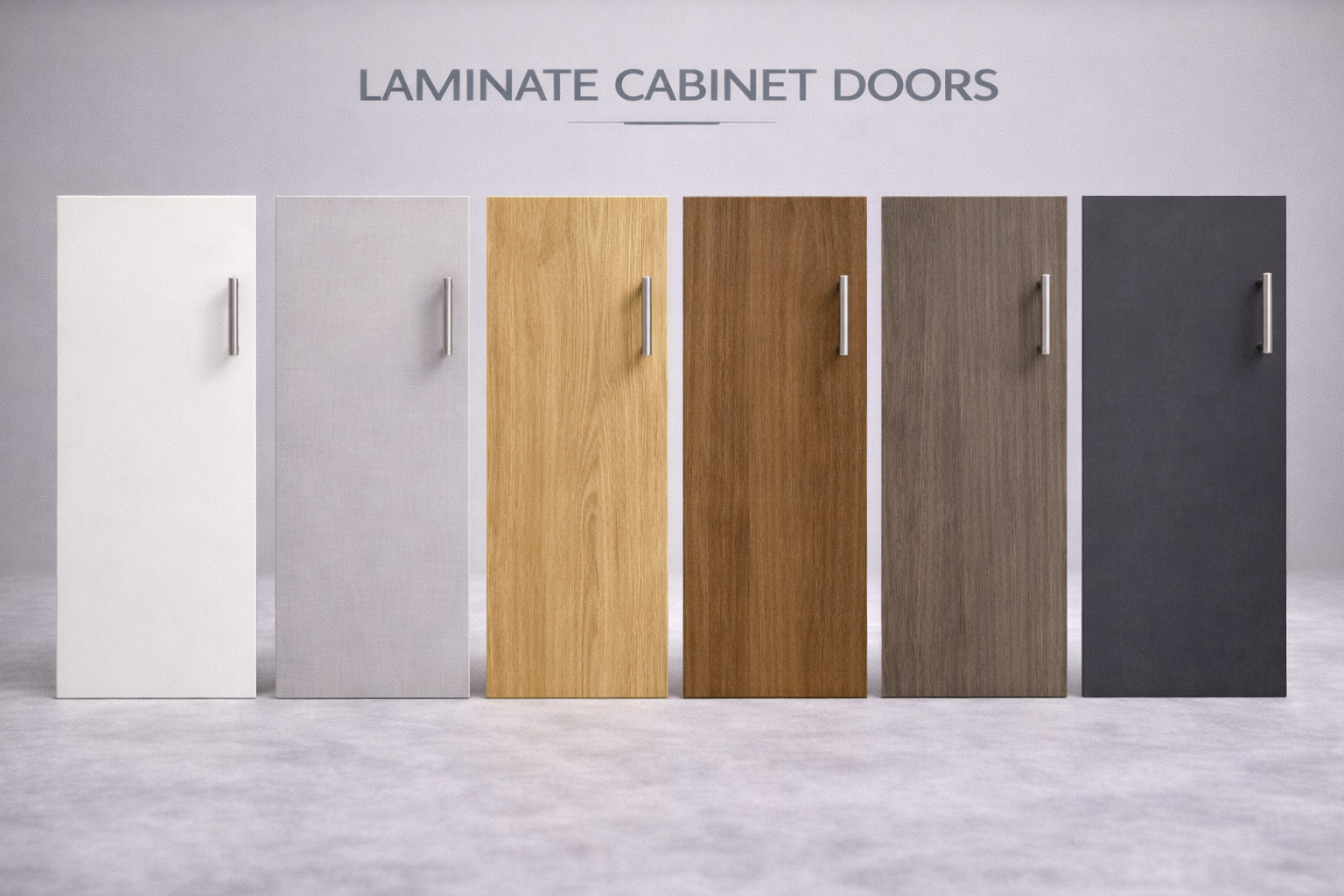
TFL vs lacquer pits two different finish philosophies. TFL is a melamine-impregnated paper fused to the board at the mill—color and texture are locked in before the door reaches your kitchen. Lacquer (including many conversion varnish and painted systems) is sprayed in a shop, building a film on MDF or wood that can be recoated or touched up later.
We specialize in 3/4" TFL doors manufactured in Gardendale, Alabama—not onsite spray finishing—because fused doors give predictable color batch consistency across large kitchens. Lacquer still wins some design briefs. Here is an honest comparison without pretending one finish fits every taste.
This guide is written for real remodel decisions—not catalog trivia. We focus on vertical cabinet doors because that is what we build: 3/4" thermally fused laminate doors manufactured in Gardendale, Alabama, with decorative papers from Wilsonart, Formica, EGGER, ARAUCO, Uniboard, Kronospan, and partner mills. When a finish wins on countertops but loses on doors, we say so. When commodity melamine is enough for a laundry room, we say that too. Use the comparison table and FAQs as a checklist, then validate your sizes and decor on pricing or in the shop before demo day.
TFL Finish Behavior
TFL wear layers resist scratching, household cleaners, and daily fingerprints better than most consumer paint without topcoat maintenance schedules. Woodgrain TFL uses synchronized texture; solids stay uniform door to door.
Damage is usually edge impact or a rare chip—not film peel across the whole face. Replacement doors match if you keep the same decor code.
Lacquer and Painted Finishes
Professional lacquer delivers depth on MDF, custom colors, and repairs that can happen in a spray booth years later. High-gloss lacquer kitchens photograph beautifully.
Quality depends heavily on shop process: primer, spray environment, cure time, and whether the home has UV exposure that ambered older clears.
Maintenance and Repair
TFL cleans with soft cloths and non-abrasive cleaners—no wax required. Lacquer may need gentler chemistry on gloss and occasional touch-up on edges where pots bump.
If you anticipate frequent color changes, lacquer-friendly substrates can be stripped and resprayed. TFL color changes mean new doors—a feature when you want zero VOC rework in the home.
Cost Drivers (Without Fake Numbers)
TFL pricing ties to panel decor, door style, and size—transparent on our pricing page. Lacquer quotes include material, labor, booth time, and finish level ( gloss tiers, glazing, distressing).
Large kitchens emphasize batch consistency: TFL excels when all 24 doors must match on delivery day. Custom lacquer excels when the color is a one-off sample from an designer.
Paint-Grade MDF vs TFL on Shakers
Paint-grade MDF shakers are the usual lacquer canvas—smooth fields, crisp corners, endless color. TFL shakers instead show synchronized grain or solid color without brush marks.
You cannot easily turn a TFL door into a painted door later without abrasive prep that fights the fused surface.
Choose paint when color experimentation matters; choose TFL when you want factory-controlled grain and fewer VOC events in the home.
Humidity and Seasonal Movement
Both TFL and lacquered MDF doors rely on stable cores. Seasonal humidity changes cause slight movement; finishes do not prevent joint lines on five-piece wood doors—that is why many modern kitchens use TFL on engineered cores with stable dimensions.
Lacquer films can hairline crack on solid wood stiles if movement is high. TFL faces move with the substrate as one laminated skin.
Bathrooms need ventilation regardless of finish—surface type is not a substitute for a fan that works.
Timeline Expectations Without Fake Promises
TFL Door publishes process through our site: configure, produce in Gardendale, ship. Lacquer shops quote based on booth backlog and cure windows—compare real written estimates, not rumors.
If your remodel deadline is fixed, ask each vendor for their current production queue in writing. We avoid inventing ship dates in SEO articles because calendars change weekly.
Samples arrive faster than full kitchens—order TFL chips while you wait on lacquer spray schedules if you are deciding between paths.
Measuring, Hinges, and Field Fit
Replacement doors only look professional when overlay, reveal, and hinge boring match your existing boxes. Measure width and height on multiple points—old cabinets are rarely perfectly square. Note whether you have concealed European hinges or face-frame overlays because hole patterns must match or you will re-drill carcases.
Three-quarter-inch TFL doors from TFL Door use standard boring layouts compatible with common hinge plates, but always verify your current cup distance and overlay before submitting sizes on the pricing page. Keep one old door as a template until the new shipment arrives.
If you are working with a contractor in Birmingham, Huntsville, or anywhere we ship, send them the decor code and thickness spec early so trim carpenters plan consistent reveals. Miscommunication on thickness is a common reason doors feel wrong even when color is perfect.
Climate, Cleaning, and Long-Term Appearance
Alabama humidity swings mean ventilation matters more than mystic finish claims. Wipe spills promptly, use range hoods, and avoid draping wet towels over door faces. Fused melamine-family surfaces and quality edgeband tolerate normal kitchen life when edges stay sealed.
Cleaning is simple: soft microfiber, mild detergent, no abrasive pads on gloss-adjacent textures. Neither harsh chemistry nor magic sprays substitute for dry edges and proper sink caulk.
Sun fading can shift any material over years if intense UV hits the same door daily. Matte TFL grains hide micro-scratches better than high-gloss alternatives; if your kitchen gets afternoon sun, favor matte or soft-texture decors from Wilsonart, Formica, EGGER, ARAUCO, Uniboard, or Kronospan lines.
Working With TFL Door on Your Timeline
We manufacture in Gardendale rather than brokering imports—when you call (205) 222-6866 you reach people who touch the product. Use the online shop for straightforward reorders and the pricing configurator when you are validating budget before demo day.
Order samples before committing to a whole kitchen of one decor, especially when matching stone, tile, or LVP flooring. A sample board on the counter for three days prevents expensive regret.
Document your choices: decor code, edge color, door style, and hinge boring. Future additions (wine fridge surround, pantry, laundry) then reorder cleanly without guessing which batch you used in 2026.
Remodel Checklist Before You Order Doors
You searched TFL vs lacquer cabinet doors because the finish choice is confusing and the stakes are high—kitchens are the most used room in the house. Before you compare brands on paper, walk the space and list what actually failed in the old kitchen: peel, chip, color fade, or just dated style.
Photograph every opening with a tape measure in frame. Note appliance clearances, especially wall ovens, refrigerators with deep handles, and trash pullouts that kiss door swings. A quarter-inch miscount multiplied across twenty openings becomes an expensive reorder.
Confirm your hinge brand and overlay. If you are switching from thermofoil builders-grade hinges to soft-close plates, buy hardware before doors arrive so installers are not guessing cup depth on install day.
Plan touch-up and spare strategy: store one extra door if you have young kids or large dogs; label it with decor code and order date in the garage. Reorder paths are smoother when you treat the kitchen like a long-life asset, not a one-year flip.
Finally, align expectations with whoever cooks in the house. The person maintaining the kitchen daily should veto gloss levels and dark colors that show every crumb. Practical buy-in beats the prettiest Pinterest board when Monday morning coffee spills happen.
Side-by-Side Comparison
| Feature | TFL (fused laminate) | Lacquer / painted spray finish |
|---|---|---|
| Where color is applied | Mill fuse before fabrication | Spray booth after door is built |
| Custom color match | Choose from decor catalogs | Can match bespoke colors |
| Scratch resistance | High—melamine wear layer | Depends on clear and process |
| Repair in home | Touch-up markers; swap door | Possible respray on site or in shop |
| Gloss level variety | Matte to medium textures common | Full gloss to ultra-flat possible |
| Batch consistency | Excellent across many doors | Requires strict shop QC |
| Typical turnaround driver | Door count and decor stock | Booth schedule and cure windows |
| TFL Door builds | Yes—core product | Not our in-house finish |
Pros & Cons
TFL Pros
- Hard factory wear surface
- Consistent grains across big kitchens
- Easy wipe-down care
TFL Cons
- Colors live in catalog SKUs
- Edgeband visible on close look
- Not for bespoke paint matches
Lacquer Pros
- Unlimited custom colors
- High-gloss luxury look
- Can refinish later
Lacquer Cons
- Quality varies by shop
- Softer than melamine wear layer
- Odor/VOC during spray work
Why Homeowners Choose TFL Doors from TFL Door
We build 3/4" thermally fused laminate cabinet doors in Gardendale, Alabama, with decorative papers from Wilsonart, Formica, EGGER, ARAUCO, Uniboard, Kronospan, and other leading mills:
- Limited Lifetime Warranty on every door we make
- Custom sizes at no upcharge
- Hundreds of colors and realistic wood grains
- Low-VOC and CARB-compliant cores for a healthier home
- Built locally in Gardendale, Alabama
TFL or Lacquer for Replacement Doors?
Choose TFL when you want Wilsonart, Formica, EGGER, ARAUCO, Uniboard, or Kronospan grains with minimal upkeep and tight batch color on every 3/4" door we ship from Gardendale.
Choose lacquer when the design is married to a custom color or ultra-gloss film look TFL cannot copy. For fused options, start at TFL vs painted cabinets and pricing.
Lacquer rewards custom color and refinish flexibility; TFL rewards batch consistency and hard melamine wear on busy families. If you are not sure which camp you are in, order TFL samples while you collect lacquer shop references—compare under real kitchen light, not showroom spots alone.
Frequently Asked Questions
Is TFL more durable than lacquer?
TFL’s melamine wear layer generally resists scratches better than typical residential paint. High-end commercial lacquer systems narrow the gap.
Can lacquer match TFL woodgrain?
Painted shaker doors rarely duplicate synchronized TFL texture—you usually choose one aesthetic or the other.
Does TFL Door offer lacquer?
We focus on TFL fused doors built in Alabama, not sprayed lacquer finishes.
Which is easier to clean?
Both clean easily with proper products; TFL tolerates more common kitchen cleaners without dulling.
What about conversion varnish?
Conversion varnish is a professional cousin to lacquer—still a sprayed film, compared here under lacquer/paint.
Can I replace lacquer doors with TFL?
Yes—measure existing doors and pick a TFL decor that complements your boxes.
Ready to Upgrade Your Cabinets Without Replacing the Boxes?
- Measure once
- Order online or by phone
- Install in a weekend
Browse Our Full Collection of TFL Door Styles
Questions about your specific project? Call or text us anytime at (205) 222-6866—we are real people who love talking cabinet doors.
TFL vs Painted Cabinets | TFL vs Conversion Varnish | Pricing