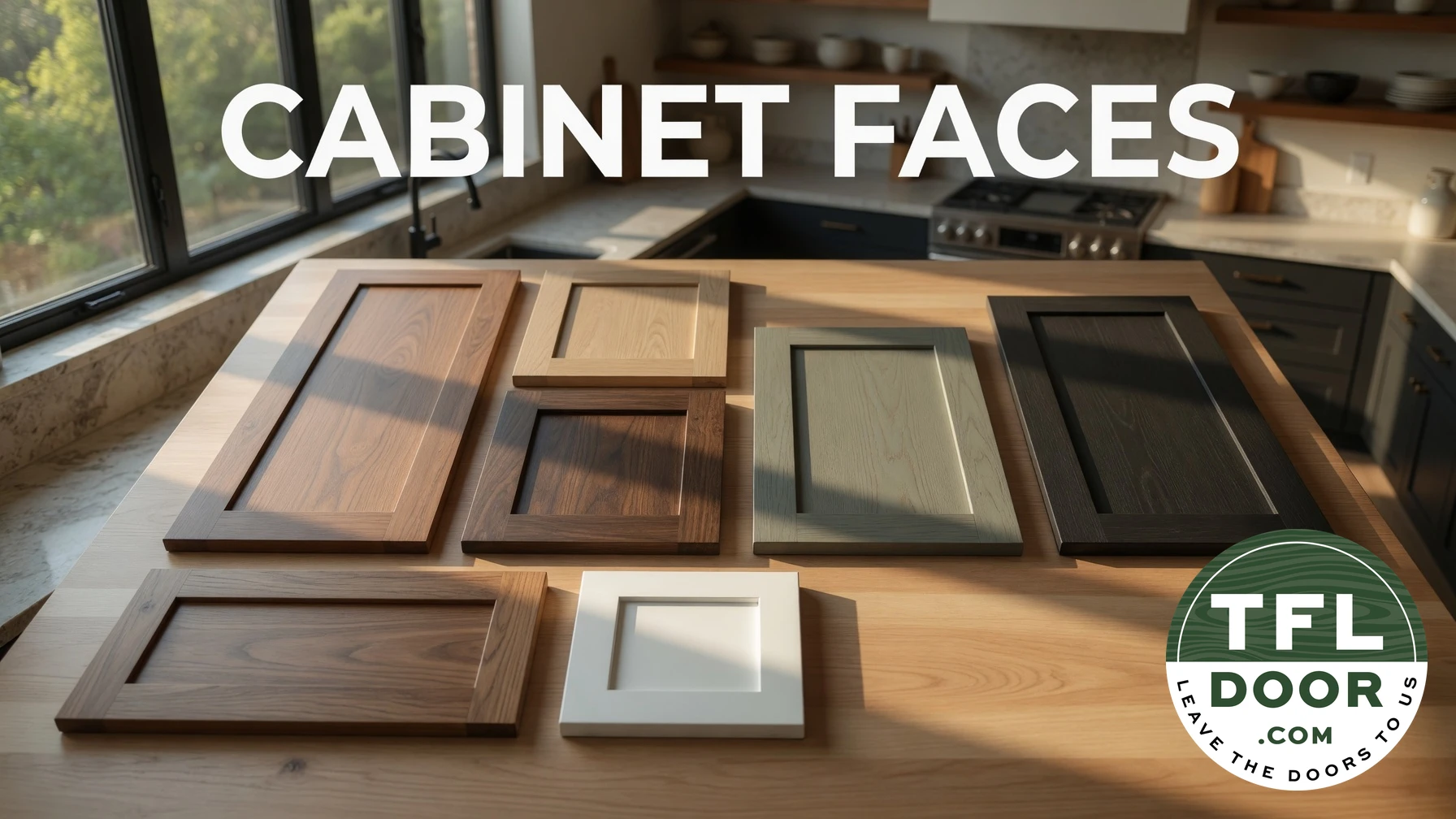
Here is a comparison where both sides are trying to do the same job: give you the warmth of real wood without paying for a solid lumber door. Veneer does it with a thin slice of actual wood. TFL does it with a fused woodgrain surface. They land in a similar place on looks, then split hard on durability.
We make TFL doors in Gardendale, Alabama, and veneer is the comparison that trips people up most, because on day one the two can look almost identical. The difference shows up a few years in.
What Is TFL (Thermally Fused Laminate)?
TFL is Thermally Fused Laminate. A decorative woodgrain sheet is bonded onto an engineered core with heat and pressure, fusing into a single panel. There is no thin layer sitting on top that can lift or peel — the surface is part of the door.
Modern TFL woodgrains are high-resolution reproductions with texture that follows the grain, so they read as real wood while staying perfectly consistent from door to door. And because nothing is glued on as a separate skin, there is no delamination to worry about.
What Is Wood Veneer?
Wood veneer is a very thin slice of real wood glued to a plywood or MDF substrate, then sealed with a clear finish. Because it is genuine wood on the surface, it has real grain and can look beautiful.
The weak spots are the glue line and the finish. That thin wood skin can chip, and its edges can lift or peel if moisture works its way in — near a sink, a dishwasher, or a steamy kettle. Veneer also needs a protective topcoat, and once that finish wears or the veneer is damaged, repair is fiddly. It costs more than TFL, too.
TFL vs Wood Veneer: Side by Side
| Feature | TFL (Thermally Fused Laminate) | Wood Veneer |
|---|---|---|
| Surface | Fused woodgrain, part of the panel | Thin real-wood slice glued on top |
| Peeling/lifting | None; nothing to delaminate | Edges can lift or peel with moisture |
| Moisture near sinks | Handles steam and splashes well | Vulnerable at edges and seams |
| Consistency | Identical grain on every door | Natural variation between slices |
| Finish | No topcoat needed | Needs a protective clear coat |
| Repairability | Damage means door replacement | Chips and worn finish are hard to fix |
| Realism | Convincing photographic grain | Genuine wood grain |
| Cost | Budget-friendly | More than TFL, less than solid wood |
Bottom line: Veneer uses real wood on the surface, which is its one true edge. But that thin skin can peel, chip, and wear, while TFL's fused surface simply cannot delaminate — for less money.
Pros & Cons of Each
TFL Pros
- No skin to peel, lift, or delaminate
- Sealed surface shrugs off everyday splashes and steam
- Consistent grain across every door
- No topcoat to wear out
- Lower cost than veneer
TFL Cons
- Reproduced grain, not a real wood slice
- Damaged doors are replaced, not refinished
Wood Veneer Pros
- Genuine wood grain on the surface
- Warm, natural look
- Less costly than solid wood
Wood Veneer Cons
- Edges can peel or lift over time
- Thin veneer chips and wears through
- Needs a protective finish
- Costs more than TFL
Why Homeowners Choose TFL Doors from TFL Door
If the goal is a wood look that survives real kitchen life, TFL is the sturdier route, and we guarantee it:
- Limited Lifetime Warranty on every door
- Custom sizes at no upcharge
- High-resolution woodgrains from Wilsonart, Funder, and other top mills
- No delamination risk — the surface is fused, not glued on
- Low-VOC, CARB-compliant cores
- Made locally in Gardendale, Alabama
TFL or Wood Veneer: Which Should You Pick?
If having a real wood surface matters to you and the doors are away from moisture, veneer gives you genuine grain at a mid-range price. Keep it dry and keep the finish intact.
For a kitchen — where steam, splashes, and daily wiping are the norm — TFL is the safer bet. You get the same wood look without the peeling risk, no topcoat to fail, and a lower price. That is an easy call for most homeowners.
Wood look, zero peeling. See our woodgrain doors at tfldoor.com.
Frequently Asked Questions
Is TFL better than wood veneer?
For kitchens, usually yes. TFL cannot peel or delaminate and shrugs off moisture, while veneer's thin wood skin can lift, chip, and wear. Veneer's only real advantage is that its surface is genuine wood.
Does wood veneer peel?
It can. The thin wood layer is glued to a substrate, and its edges can lift or peel if moisture gets in, which is common near sinks and dishwashers.
Does TFL look like wood veneer?
Very close. Good TFL woodgrains are photographic and textured, so on the surface they look much like veneer, with the bonus of perfect door-to-door consistency.
Which costs less, TFL or veneer?
TFL is generally cheaper. Veneer sits between TFL and solid wood on price because it uses a real wood layer and a protective finish.
Ready to Upgrade Your Cabinets Without Replacing the Boxes?
- Measure once
- Order online or by phone
- Install in a weekend
Browse Our Full Collection of TFL Door Styles
Questions about your specific project? Call or text us anytime at (205) 222-6866—we are real people who love talking cabinet doors.
Browse Door Styles | TFL vs Solid Wood | View Color Options | Contact Us