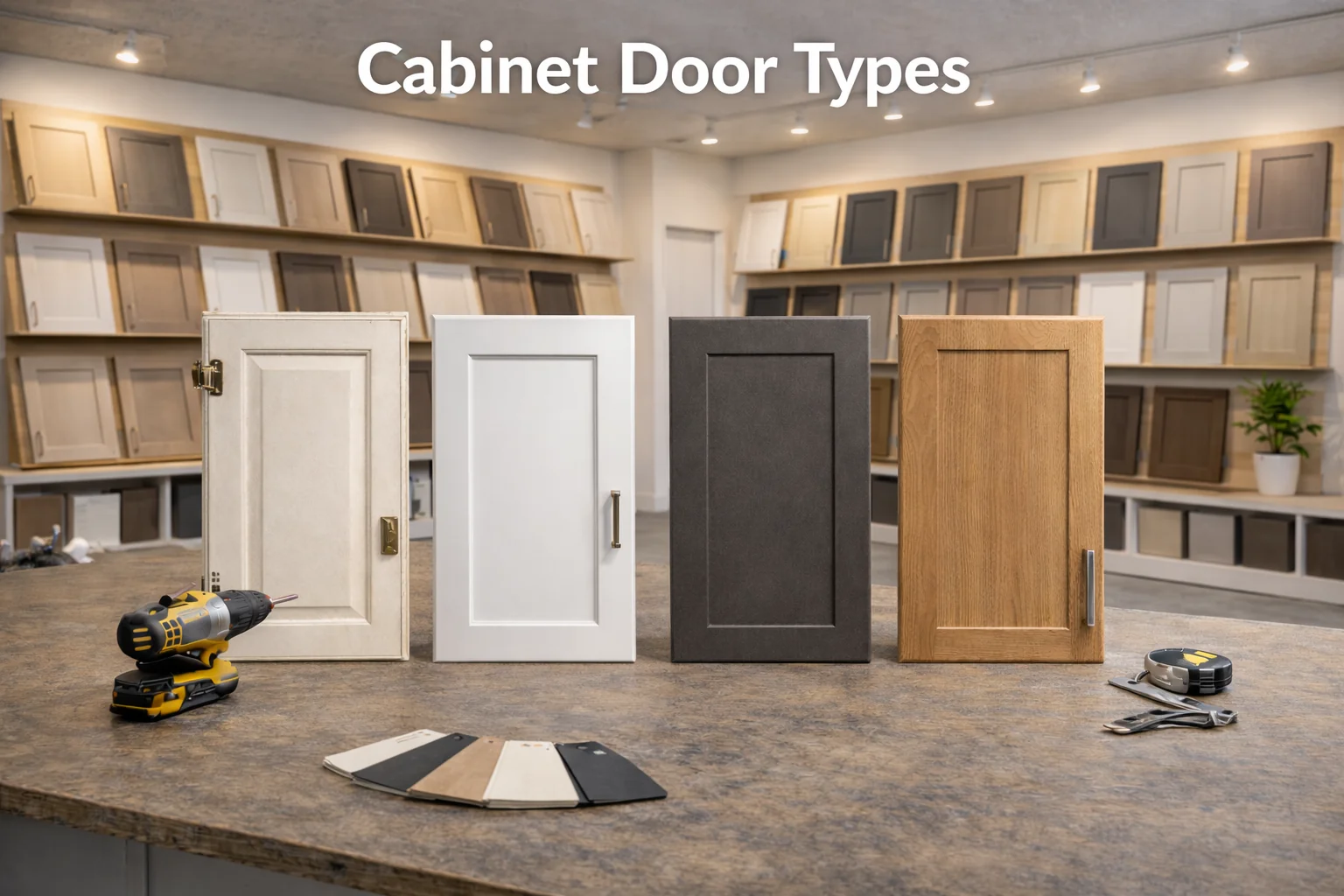
This comparison needs a quick myth-buster before we start, because TFL and MDF are not actually opponents. MDF is a board — a core material. TFL is a finished surface that often gets fused onto that very board. So when someone asks whether to buy TFL or MDF doors, what they usually mean is: should I get a raw or painted MDF door, or a TFL-surfaced one?
We build TFL doors in Gardendale, Alabama, and we clear this up almost daily. The distinction matters more than it sounds, and it changes which door you should buy.
What Is TFL (Thermally Fused Laminate)?
TFL is Thermally Fused Laminate — a decorative sheet fused onto a core under heat and pressure. And here is the part that surprises people: that core is very often MDF. TFL is the durable, factory-finished skin; MDF is one of the boards it is commonly fused to.
So a TFL door gives you the smooth, dimensionally stable benefits of an MDF core plus a fused surface in hundreds of colors and woodgrains, with no painting required. You are essentially getting a finished MDF door done right.
What Does a Plain MDF Door Mean?
MDF (medium-density fiberboard) is an engineered board made from fine wood fibers compressed with resin. It is smooth, stable, and takes paint beautifully, which is why painted MDF doors are so popular for a clean, modern look.
A plain MDF door is typically sold raw for you to paint, or pre-painted. Painted MDF looks great, but the paint is the vulnerable part: it can chip at edges and corners, and touch-ups rarely match perfectly. Raw MDF also swells if bare edges soak up water near a sink. The board itself is solid; it is the finish (or lack of one) that decides how well the door holds up.
TFL-Surfaced vs Plain MDF Doors
| Feature | TFL (Thermally Fused Laminate) | Plain / Painted MDF |
|---|---|---|
| What it is | A finished surface fused to a core (often MDF) | The core board itself, raw or painted |
| Finish | Baked-in color and grain, no painting | Paint applied on top, or left raw |
| Chipping | Surface will not chip like paint | Paint can chip at edges and corners |
| Touch-ups | Not needed | Chips are hard to match on repaint |
| Moisture at edges | Sealed by the fused surface | Raw edges can swell if water gets in |
| Color options | Hundreds, including woodgrains | Any paint color, but you do the finishing |
| Cost | Finished at the factory, great value | Cheaper raw, but add paint and labor |
| Best for | Durable, low-maintenance finished doors | DIY painters wanting a custom color |
Bottom line: Think of TFL as the finish and MDF as the board it usually sits on. A TFL door gives you an MDF core with a tough factory surface, instead of paint you have to maintain.
Pros & Cons of Each
TFL Pros
- Factory-finished, no painting or sealing
- Surface will not chip like paint
- Hundreds of colors and woodgrains
- Sealed edges resist moisture
- Consistent finish on every door
TFL Cons
- Cannot change the color by repainting later
- Color-matched edgeband seam is visible
MDF Pros
- Takes paint well for any custom color
- Smooth, modern painted look
- Cheaper if bought raw
- Easy for a DIY refinish
MDF Cons
- Paint chips and needs touch-ups
- Raw edges swell if water gets in
- Painting adds cost and labor
- Chips are hard to color-match
Why Homeowners Choose TFL Doors from TFL Door
If you want the stability of MDF without babysitting a painted finish, a TFL door is the answer, and we stand behind it:
- Limited Lifetime Warranty on every door
- Custom sizes at no upcharge
- Hundreds of colors and woodgrains from Wilsonart, Funder, and other top mills
- Factory-fused finish on a stable MDF core
- Low-VOC, CARB-compliant cores
- Made locally in Gardendale, Alabama
TFL or MDF: Which Should You Choose?
If you specifically want a painted door in an exact custom color and you do not mind occasional touch-ups, a painted MDF door is a fine choice — and yes, it still has an MDF core, just like most TFL doors.
For a finish that stays put with zero painting, a TFL-surfaced door is the better everyday value. You get the same stable core, plus a tough fused surface that will not chip, in far more colors than you would want to paint yourself.
Get the MDF core with a finish that lasts. Browse TFL doors at tfldoor.com.
Frequently Asked Questions
Is TFL the same as MDF?
No. MDF is a core board; TFL is a finished surface that is often fused onto MDF. A TFL door usually has an MDF core with a durable laminate surface on top.
Is a TFL door better than a painted MDF door?
For low maintenance, yes. TFL's fused surface will not chip like paint and needs no touch-ups, while both share the same stable engineered core.
Does MDF swell with water?
Raw or exposed MDF edges can swell if they soak up water. A fused TFL surface seals the board, which is one reason finished TFL doors handle kitchen moisture better than bare MDF.
Which is cheaper, TFL or MDF?
Raw MDF is cheaper to buy, but once you add paint and labor, a factory-finished TFL door is often the better overall value.
Ready to Upgrade Your Cabinets Without Replacing the Boxes?
- Measure once
- Order online or by phone
- Install in a weekend
Browse Our Full Collection of TFL Door Styles
Questions about your specific project? Call or text us anytime at (205) 222-6866—we are real people who love talking cabinet doors.
Browse Door Styles | TFL vs Painted Cabinets | TFL vs Particle Board | Contact Us