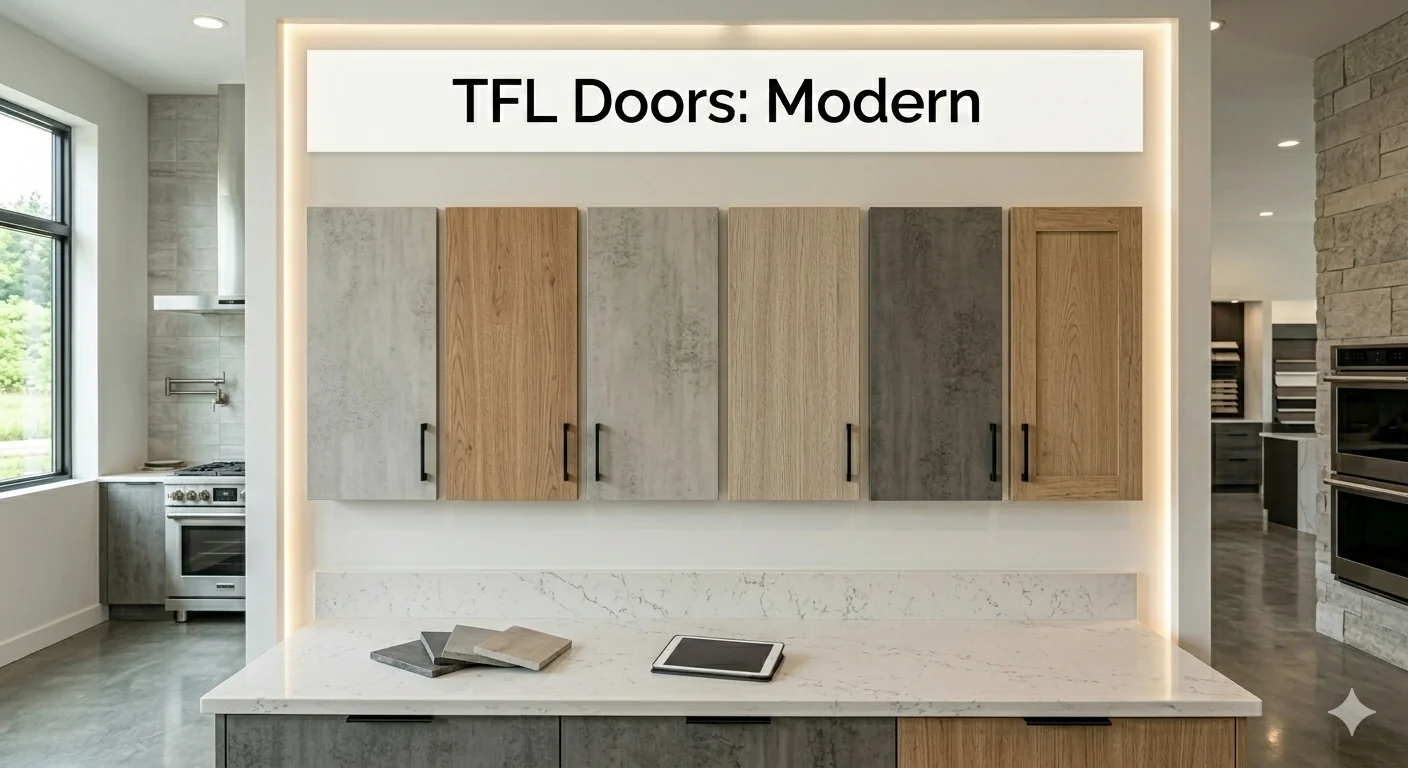
Acrylic doors have that mirror-shine, ultra-modern look a lot of people fall for on a showroom floor. TFL is the quieter workhorse that shows up in most real kitchens. Both can look fantastic. They just age very differently once fingerprints, dish towels, and Saturday-morning pancakes get involved.
We build Thermally Fused Laminate doors in Gardendale, Alabama, and acrylic comes up any time someone wants high gloss. So where does acrylic earn its price tag, and where does TFL quietly win the daily grind?
What Is TFL (Thermally Fused Laminate)?
TFL is Thermally Fused Laminate. A decorative sheet is bonded onto an MDF or particleboard core with heat and pressure until the two become one panel. No topcoat sprayed on, no film laid over the top — the color and grain are part of the door.
TFL comes in matte, satin, woodgrain, and even some low-gloss finishes. It will not give you the wet-glass shine of acrylic, but it also will not show every fingerprint and swirl mark, and it holds up to years of wiping without dulling.
What Are Acrylic Cabinet Doors?
Acrylic doors are built by pressing a high-gloss acrylic sheet onto an MDF core, usually with a matching edgeband to hide the seam. The result is a deep, reflective, almost liquid finish that reads high-end and very contemporary.
That shine is what you are paying for, and it is genuinely beautiful in the right kitchen. The catch is that a mirror surface shows everything: fingerprints, dust, fine scratches, and the occasional smudge from little hands. Acrylic is also one of the pricier door finishes out there, and a deep scratch usually is not a fix-it-yourself job.
TFL vs Acrylic: Side by Side
| Feature | TFL (Thermally Fused Laminate) | Acrylic |
|---|---|---|
| Look | Matte to satin woodgrains and solids | High-gloss, mirror-like reflection |
| Fingerprints | Barely shows on matte finishes | Shows readily; needs frequent wiping |
| Scratch resistance | Good; scuffs are hard to notice on grain | A visible scratch stands out on the gloss |
| Scratch repair | Usually not needed | Deep scratches are tough to fix at home |
| Heat tolerance | Handles normal kitchen heat well | Good, but gloss can haze near constant heat |
| Style range | Hundreds of colors and woodgrains | Mostly solid high-gloss colors |
| Cost | Budget-friendly | Premium; among the pricier finishes |
| Best for | Everyday family kitchens, any style | Modern, low-traffic, statement kitchens |
Bottom line: Acrylic buys you a jaw-dropping shine and pays for it in price and upkeep. TFL gives you a durable, low-maintenance finish in far more looks for a lot less money.
Pros & Cons of Each
TFL Pros
- Hides fingerprints and everyday marks
- Big range of colors and realistic woodgrains
- Much friendlier price
- Consistent color across every door
- Wipes clean without special products
TFL Cons
- No true high-gloss mirror option
- Edgeband seam is visible, though color-matched
Acrylic Pros
- Stunning, deep high-gloss look
- Feels modern and high-end
- Smooth, easy-to-wipe surface
Acrylic Cons
- Shows every fingerprint and smudge
- Scratches are obvious and hard to repair
- One of the more expensive finishes
- Limited mostly to solid gloss colors
Why Homeowners Choose TFL Doors from TFL Door
For a kitchen that actually gets used, we think TFL is the smarter buy, and we stand behind it:
- Limited Lifetime Warranty on every door
- Custom sizes with no upcharge
- Hundreds of colors and woodgrains from Wilsonart, Funder, and other top mills
- Matte and low-sheen options that stay looking clean
- Low-VOC, CARB-compliant cores
- Made locally in Gardendale, Alabama
TFL or Acrylic: Which Should You Choose?
If your heart is set on that glossy, ultra-modern showpiece and the kitchen sees light traffic, acrylic delivers a look nothing else matches. Go in knowing you will wipe it often and baby it a little.
For most homeowners — families, busy cooks, anyone who wants the kitchen to still look great in ten years without fuss — TFL is the practical winner. You get durability, a huge range of styles, and a price that leaves money for the rest of the remodel.
Want the modern look without the upkeep? Browse our finishes at tfldoor.com.
Frequently Asked Questions
Are acrylic cabinet doors better than TFL?
Not for everyone. Acrylic offers a higher-gloss look, but TFL resists fingerprints, comes in far more styles, and costs much less. For daily-use kitchens, most people are happier with TFL.
Do acrylic doors scratch easily?
The gloss surface is fairly hard, but any scratch that does happen is very visible and hard to repair at home. Marks on TFL's matte woodgrains are much harder to notice.
Is TFL cheaper than acrylic?
Yes, usually by a wide margin. Acrylic is one of the more expensive door finishes, while TFL is one of the most budget-friendly durable options.
Can TFL give me a modern high-gloss look?
TFL shines in matte, satin, and low-gloss finishes rather than a true mirror gloss. If you want a clean modern look that hides smudges, TFL fits; if you specifically want wet-glass shine, that is acrylic's lane.
Ready to Upgrade Your Cabinets Without Replacing the Boxes?
- Measure once
- Order online or by phone
- Install in a weekend
Browse Our Full Collection of TFL Door Styles
Questions about your specific project? Call or text us anytime at (205) 222-6866—we are real people who love talking cabinet doors.
Browse Door Styles | View Color Options | TFL vs HPL | Contact Us